
By Marc Nicholas, Managing Director — GROUPN
At GROUPN, our approach to gaming room design has been shaped by more than 30 years of designing gaming floors for Clubs and Pubs across Australia. In that time the market has changed considerably — and in the years since we first published this article, it has changed again, faster than most expected. COVID-19 accelerated trends that were already underway, and the industry’s response has genuinely shifted the way successful gaming rooms are designed and operated.
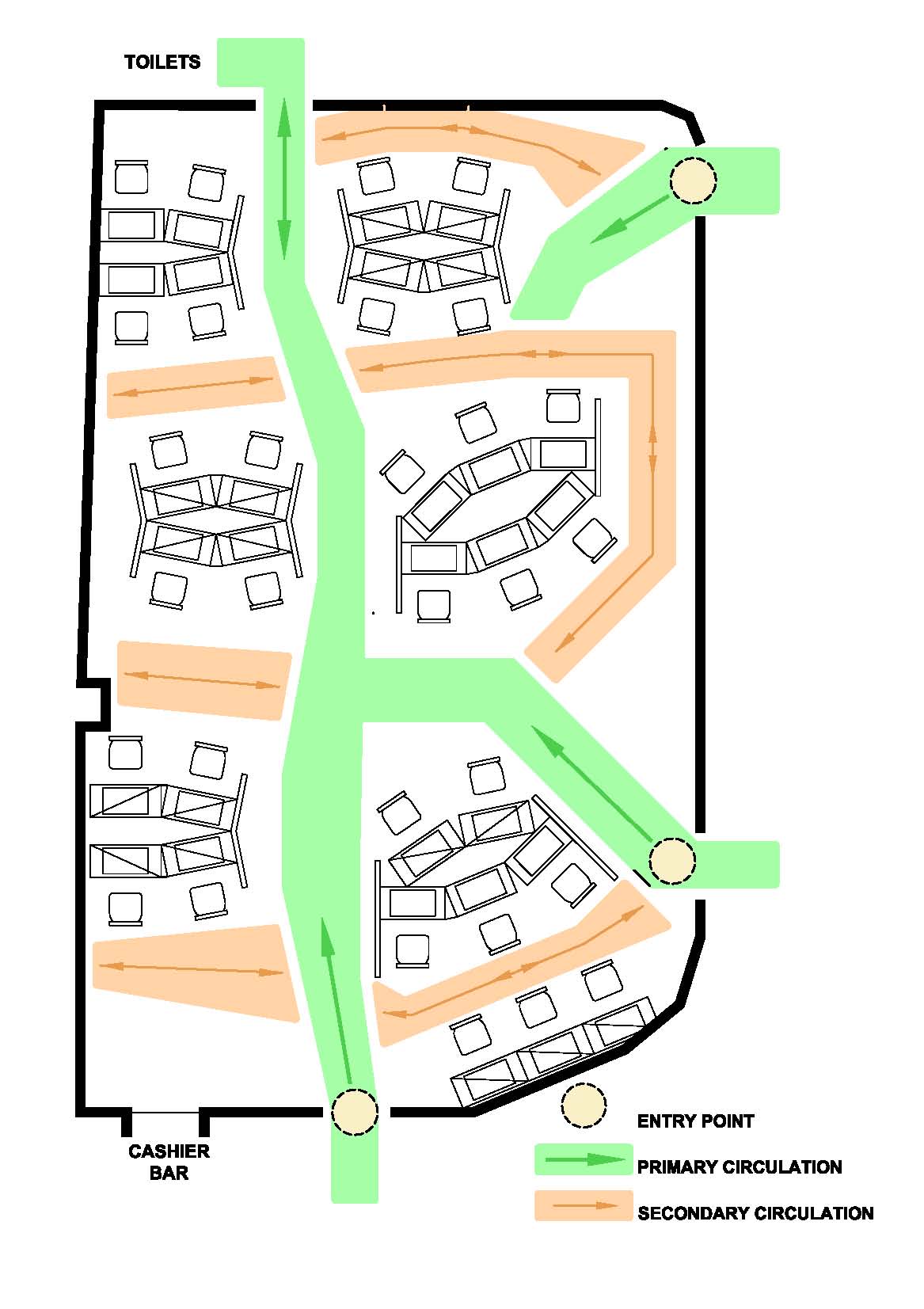
These 10 principles reflect where the industry stands in 2026. They are written specifically for the NSW market — for member-focused Clubs and destination Pubs. They are guides rather than rules, and we present them in the order they are typically considered in the design process, not in order of importance.
What makes a gaming room successful?
In the Australian market the ingredients of success are location, product, environment and service. Location and product are the primary drivers — venues that actively refresh their machine product consistently outperform those that don’t, and industry experience suggests a refresh every five to seven years is necessary to remain competitive. But product must be packaged with the right environment and service. That’s where design comes in.
THE 10 PRINCIPLES
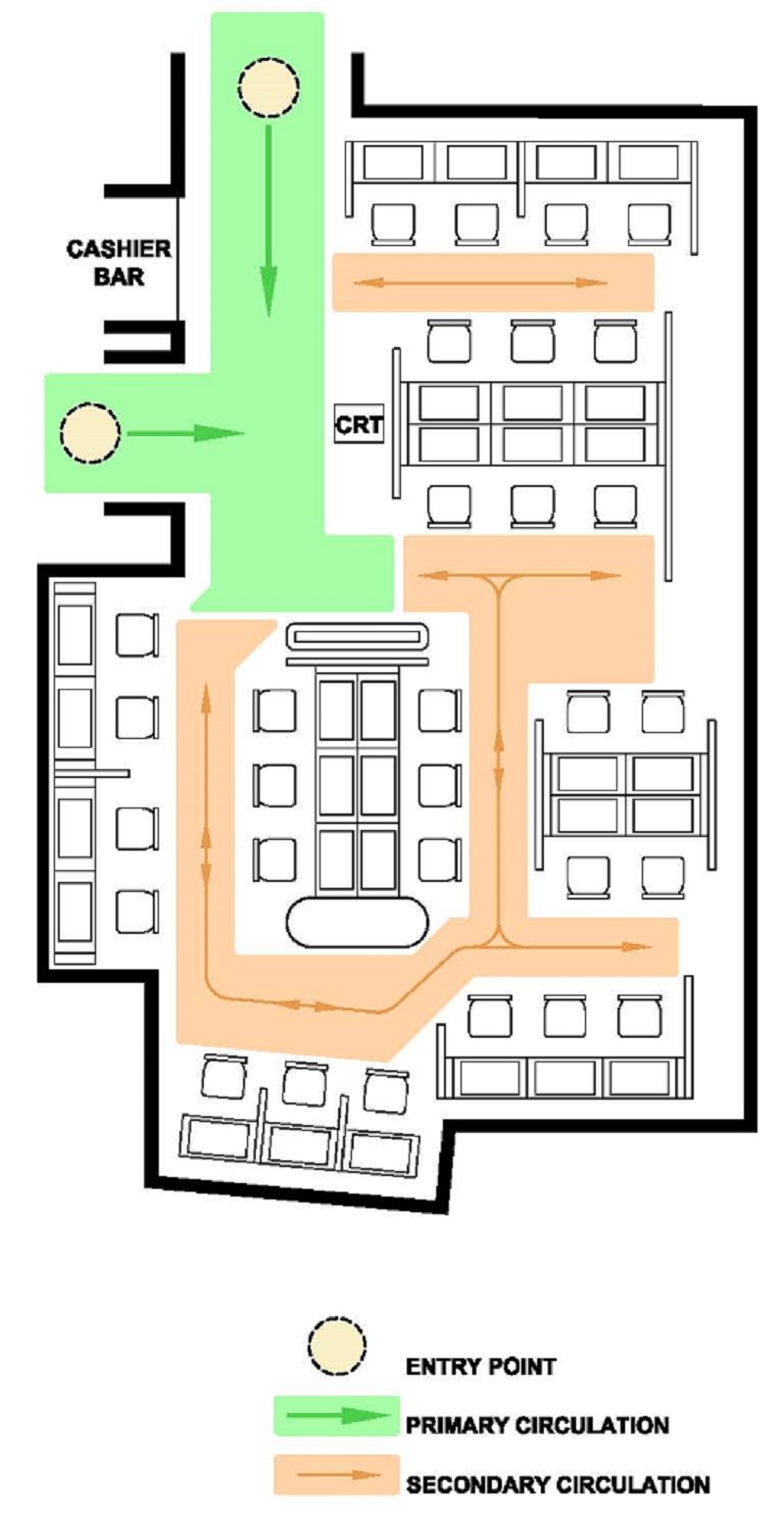
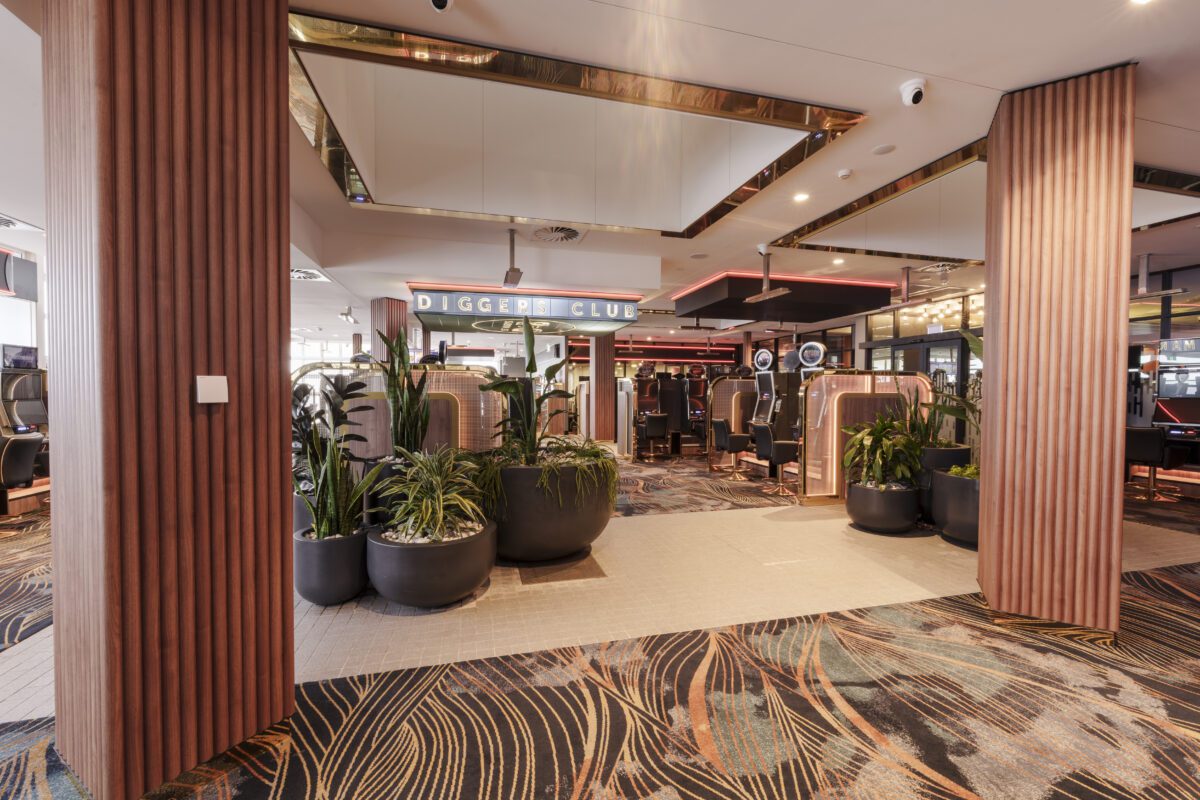
1. Direct, discreet and convenient access Players don’t want to be seen walking through or past lounge or bar areas, and they don’t want to feel exposed on arrival. For Clubs, direct access off the foyer is the standard. For Pubs, a dedicated entry from the footpath or car park is the equivalent. Convenient parking matters too — a function that fills your car park on a Friday evening will be felt on your gaming floor.
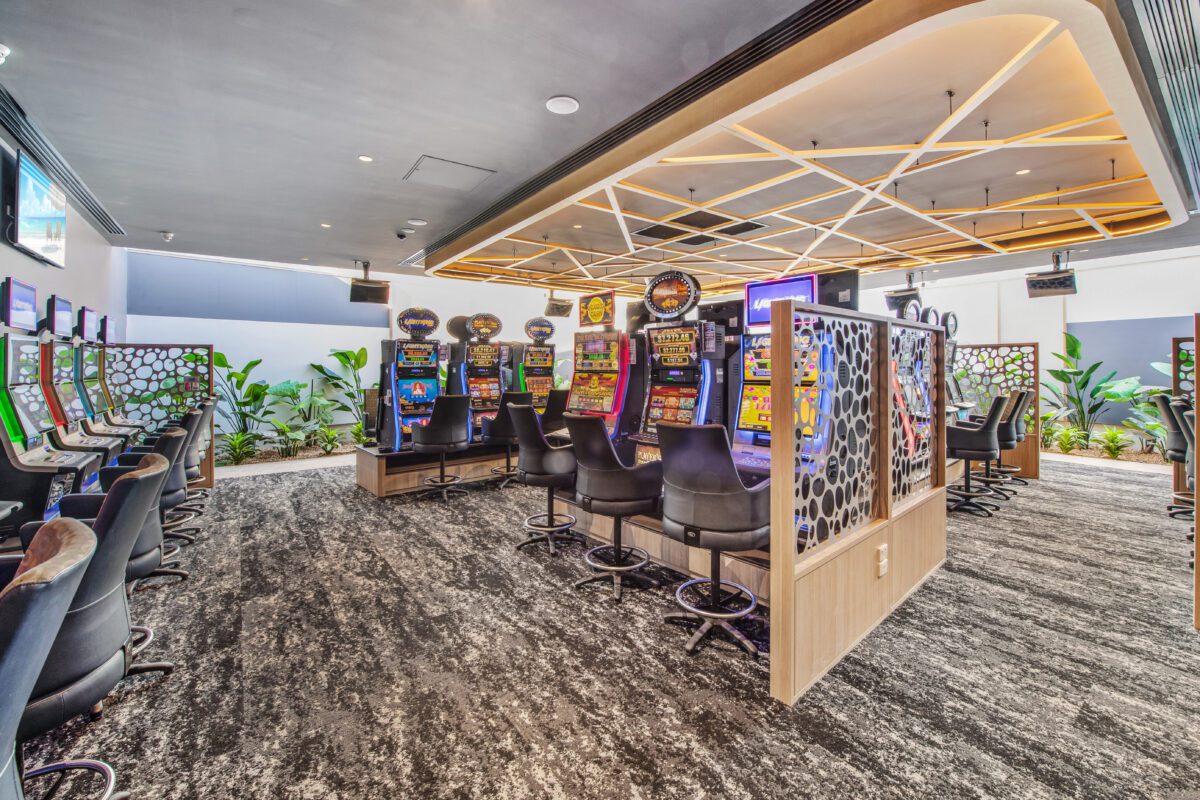
2. Clear layout and deliberate focal points When a player enters, they should immediately feel at ease — machines clearly visible, key amenities easy to locate. The layout should feel natural and unforced, defined by the arrangement of machines rather than carpet pattern or floor finish. The goal is a floor people move through organically, with no dominant corridors passing exposed machines or the backs of seated players.
3. Design the player’s immediate environment as carefully as the room itself This is the principle that has emerged most clearly from the post-COVID era. Venues that retained the spacing enforced during lockdowns — even at the cost of total machine numbers — frequently saw improved revenue per machine. Players responded strongly to not feeling crowded. Women in particular reported feeling more comfortable in more spacious, better-appointed environments. The lesson is simple: happy punter, more turnover.
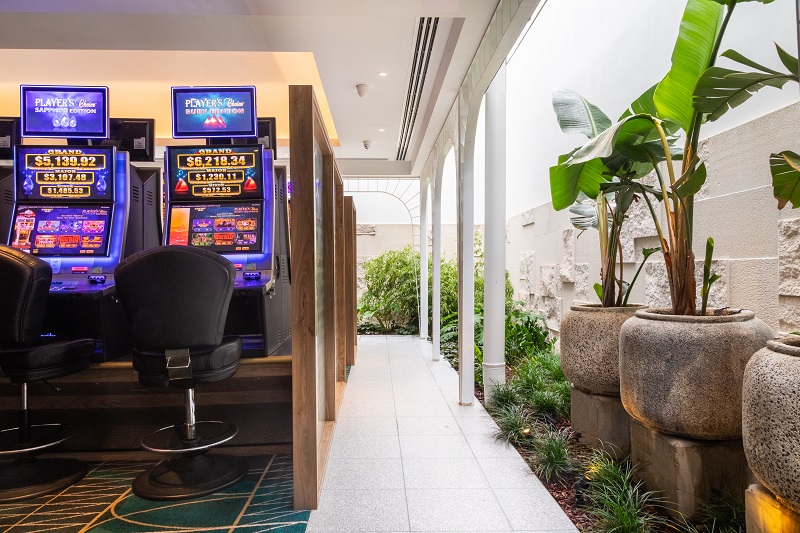
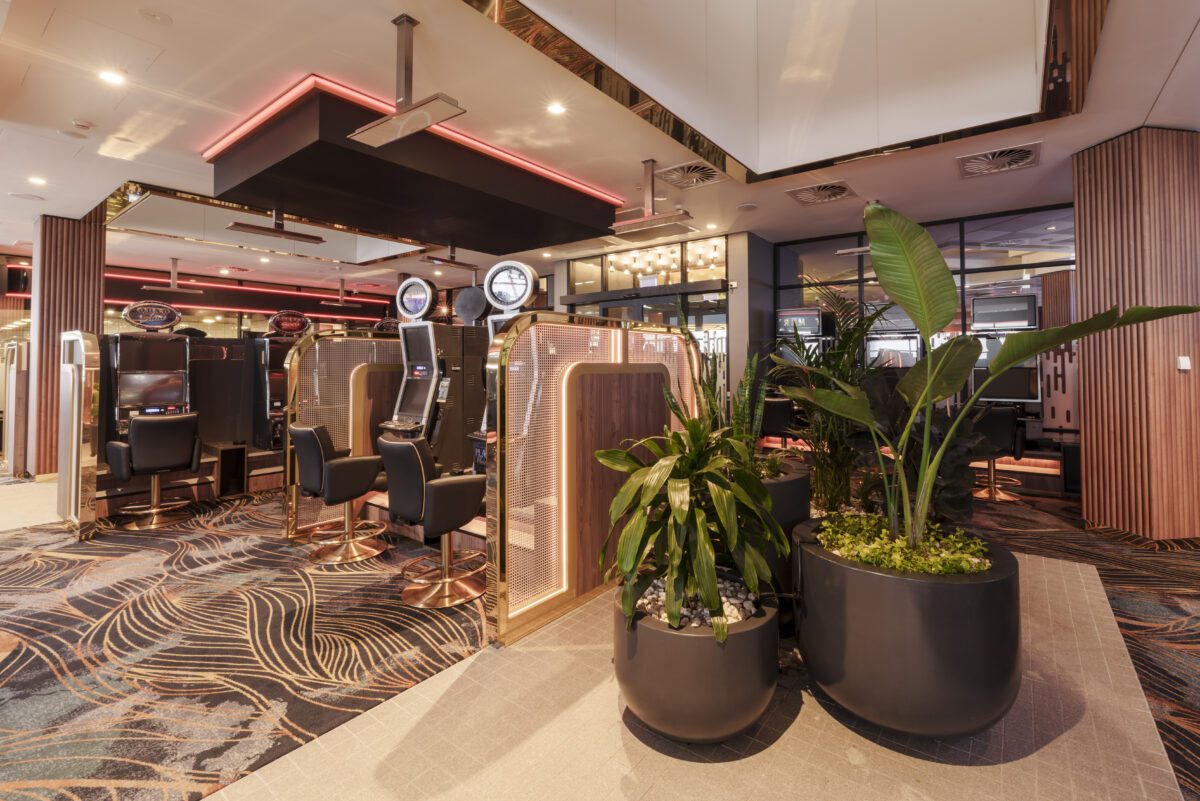
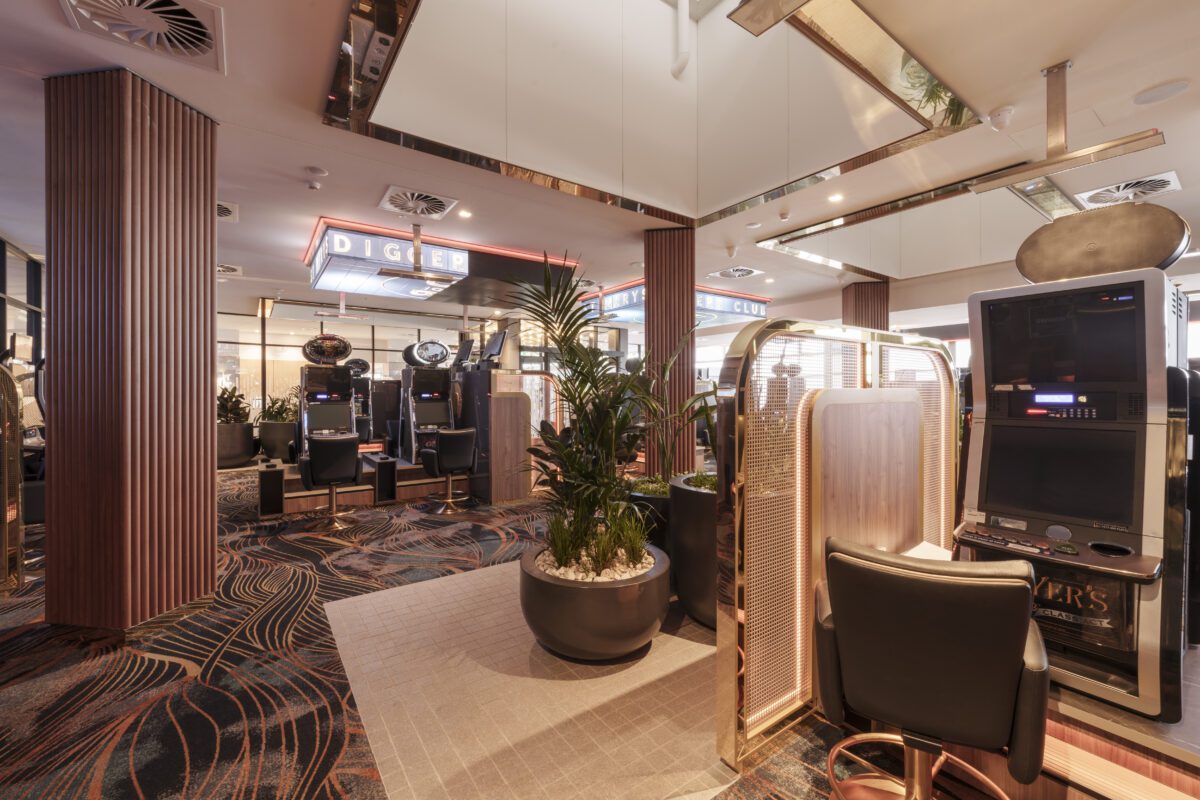
The space immediately around each player — the base, surfaces, privacy screening — has become as important as the layout of the floor itself. Leading venues have moved toward a business-class approach: generous bases, raised hobs, handbag storage, integrated charging, and adjustable privacy screens. A player who is comfortable and feels an appropriate degree of privacy simply plays for longer.
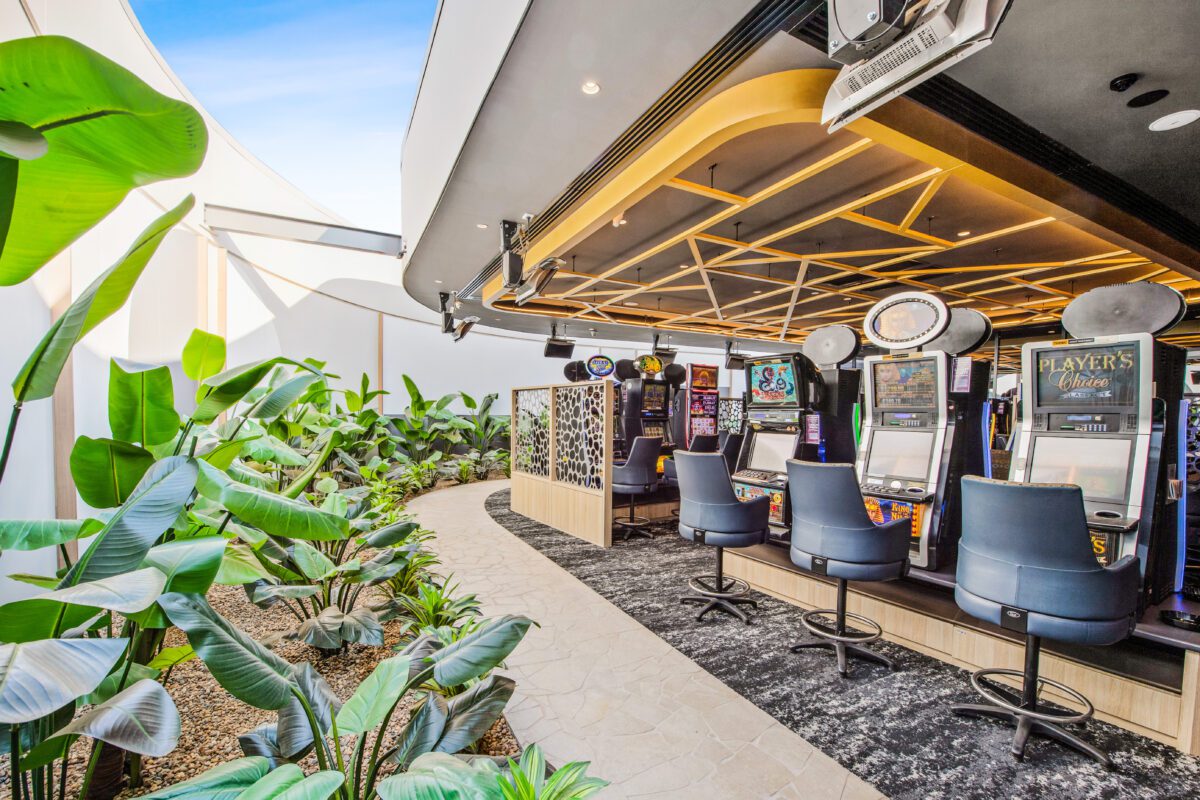
4. Small banks, maximum end machines, flexible configurations Machines at the end of a bank are played more than those in the middle. A bank of 8 has 50% end machines. A bank of 6 has 66%. A bank of 4 has 100%. Pubs — subject to a legal maximum of 30 machines — are increasingly moving to banks of 4 exclusively. Clubs use a mix, predominantly banks of 6. New configurations including T-shaped banks of 6, carousels of 3 to 8, and curved or offset banks are emerging to maximise end positions and add layout variety.
Layout should also consider segmentation by game type — lower volatility games toward the front for social players, high-jackpot games in the centre where they’re visible from entry, higher denomination games in more private positions toward the back.
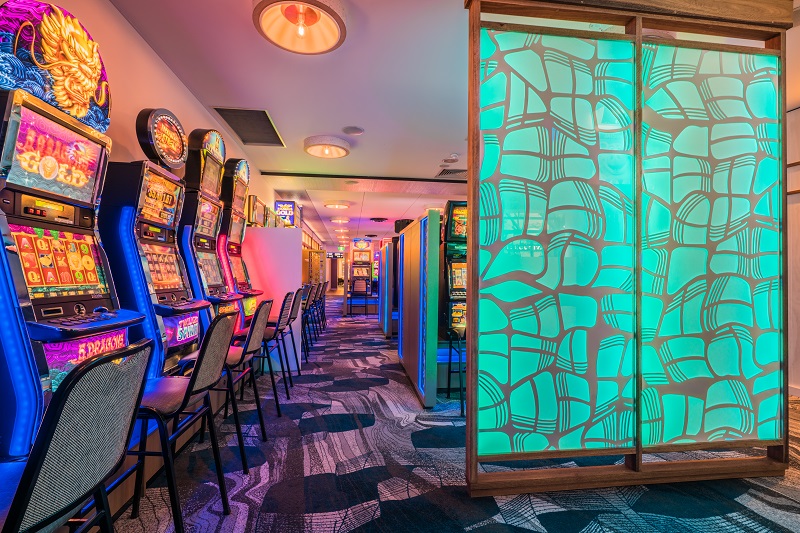
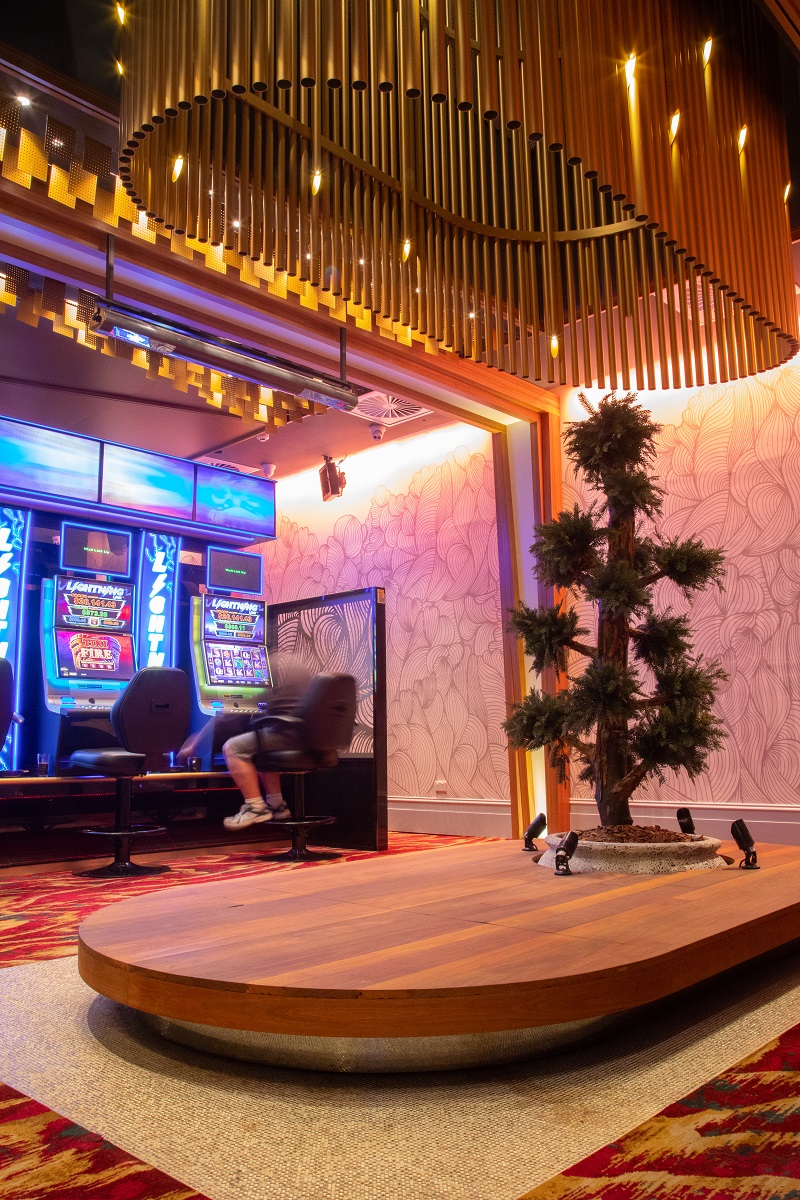
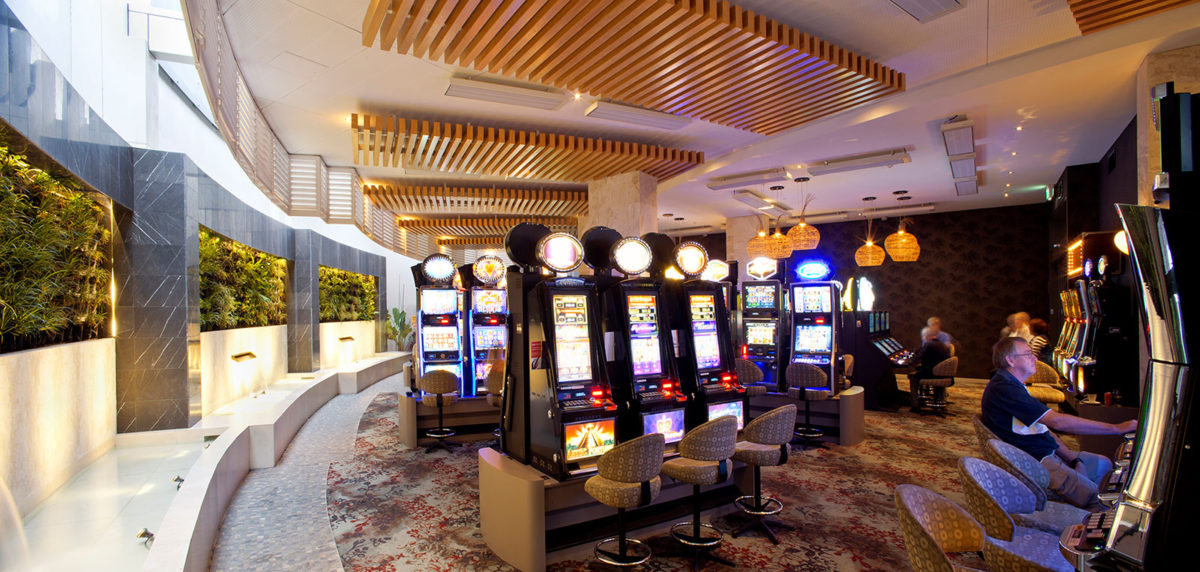
5. The gaming product is the hero Design supports the machines — it doesn’t compete with them. Gaming environments have broadly moved toward lighter, brighter, more premium spaces, but the right palette depends on your location and demographic. What matters is that every design decision serves the player experience and the machines remain the undisputed focal point.
6. Players should never have a reason to leave Toilets, beverages and food should all be accessible without players leaving the gaming environment. Every time a player leaves the floor you risk losing them to another activity. This sounds obvious — but it is consistently undermined when gaming rooms are planned without sufficient consideration of the amenities that support extended play.
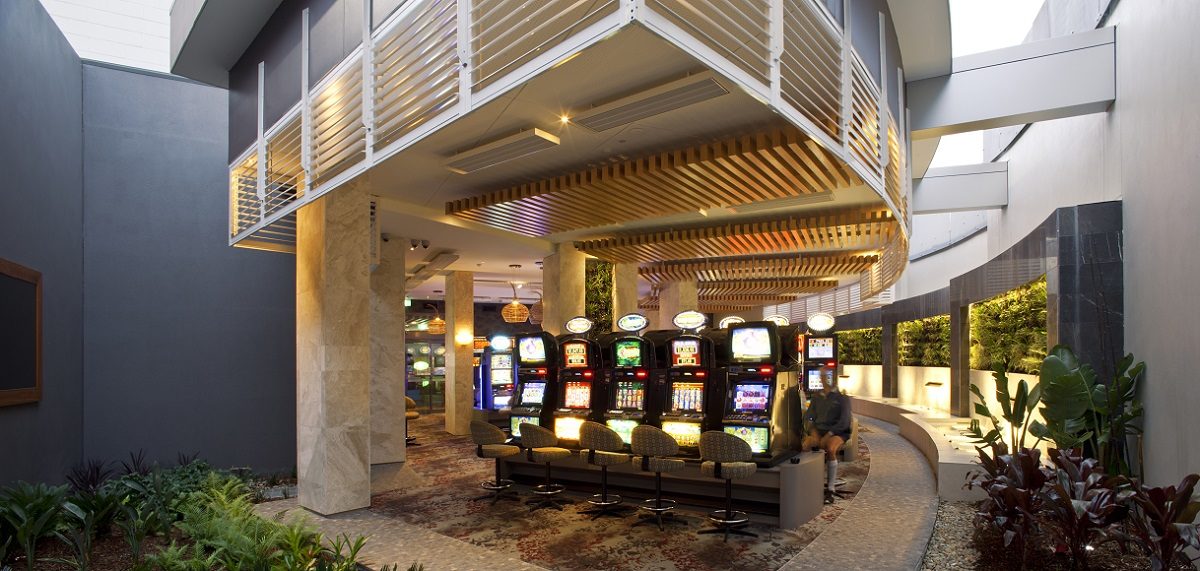
7. Keep the floor unified All machines — indoor and outdoor — should feel like part of the same environment. Where they’re separated by a corridor, function space or another part of the venue, the sense of shared energy breaks down. Venues that have kept indoor and outdoor gaming adjacent consistently outperform those that haven’t.
8. Avoid irregular floor shapes A regular, well-proportioned floor plan makes it easier for players to orient themselves and feel connected to the energy of the room. Odd-shaped floors with deep alcoves can feel deserted even when they’re genuinely busy. Good design can mitigate the challenges of an irregular space — but a well-proportioned floor will almost always outperform a fragmented one.
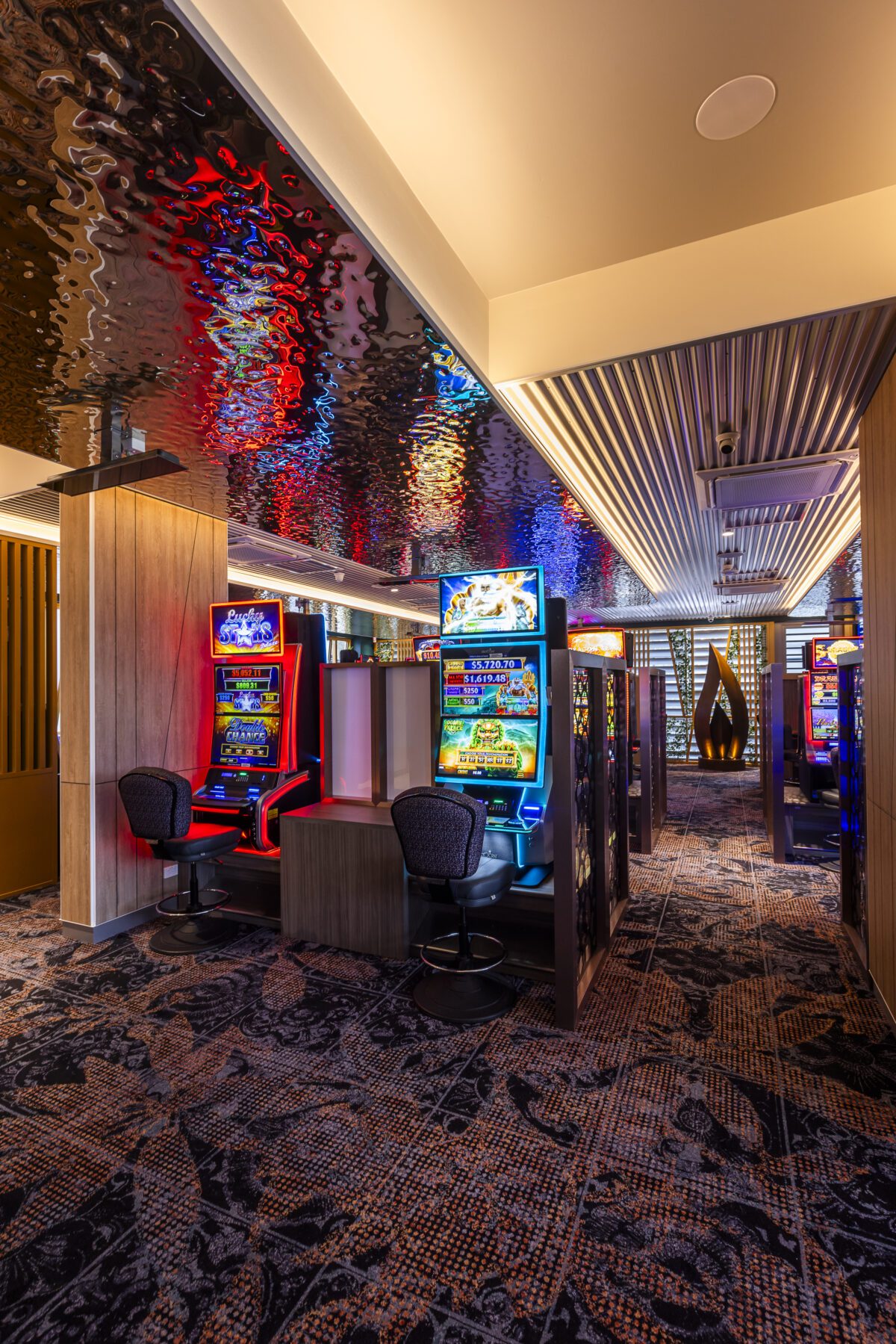
9. Get the ceiling height and overhead environment right Ceiling heights work best in the range of 2.8m to around 4m depending on the scale of the room. What has changed significantly is what happens above the machine line. Modern machines are taller, with larger toppers, and many venues are now extending this visual language upward with LED screens suspended from or mounted on the ceiling. The ceiling is no longer just a structural necessity — it’s an increasingly active part of the gaming experience.
10. Keep the floor for players Design the gaming floor to be comfortable and engaging for someone seated at a machine — but not particularly inviting for standing around. Avoid furniture that encourages socialising by non-players near the machines, and invest equally in making other parts of your venue attractive so non-gaming customers have their own destination.
A note on where the industry is heading
A small number of larger gaming-focused venues are beginning to occupy a different category — integrating bars and entertainment within the gaming floor itself, drawing on international casino environments and operating with spatial volumes well outside conventional parameters. For these venues most principles still apply, but some are deliberately set aside in favour of a more integrated entertainment experience designed for a specific market. For most Clubs and Pubs, the 10 principles above remain the most reliable and most proven framework for a gaming room that performs.
Working with GROUPN
These principles apply whether you’re a Pub with 15 machines or a Club managing 300. The fundamentals don’t change — but applying them within your specific footprint, demographic and machine mix is where the real expertise lies.
At GROUPN we’ve been designing gaming rooms for Clubs and Pubs across NSW for more than 30 years. If you’d like to talk through how these principles apply to your venue we’d welcome the conversation — whether you’re planning a full redevelopment or considering a targeted refresh.
+61 2 9369 3546 / groupn.co
Marc Nicholas is Managing Director at GROUPN
THINK_LIFESTYLE is a weekly newsletter published by GROUPN discussing directions in hospitality design
Click to get in touch with Marc or drop us line at GROUPN +61 2 9369 3546
Tags:
Share: